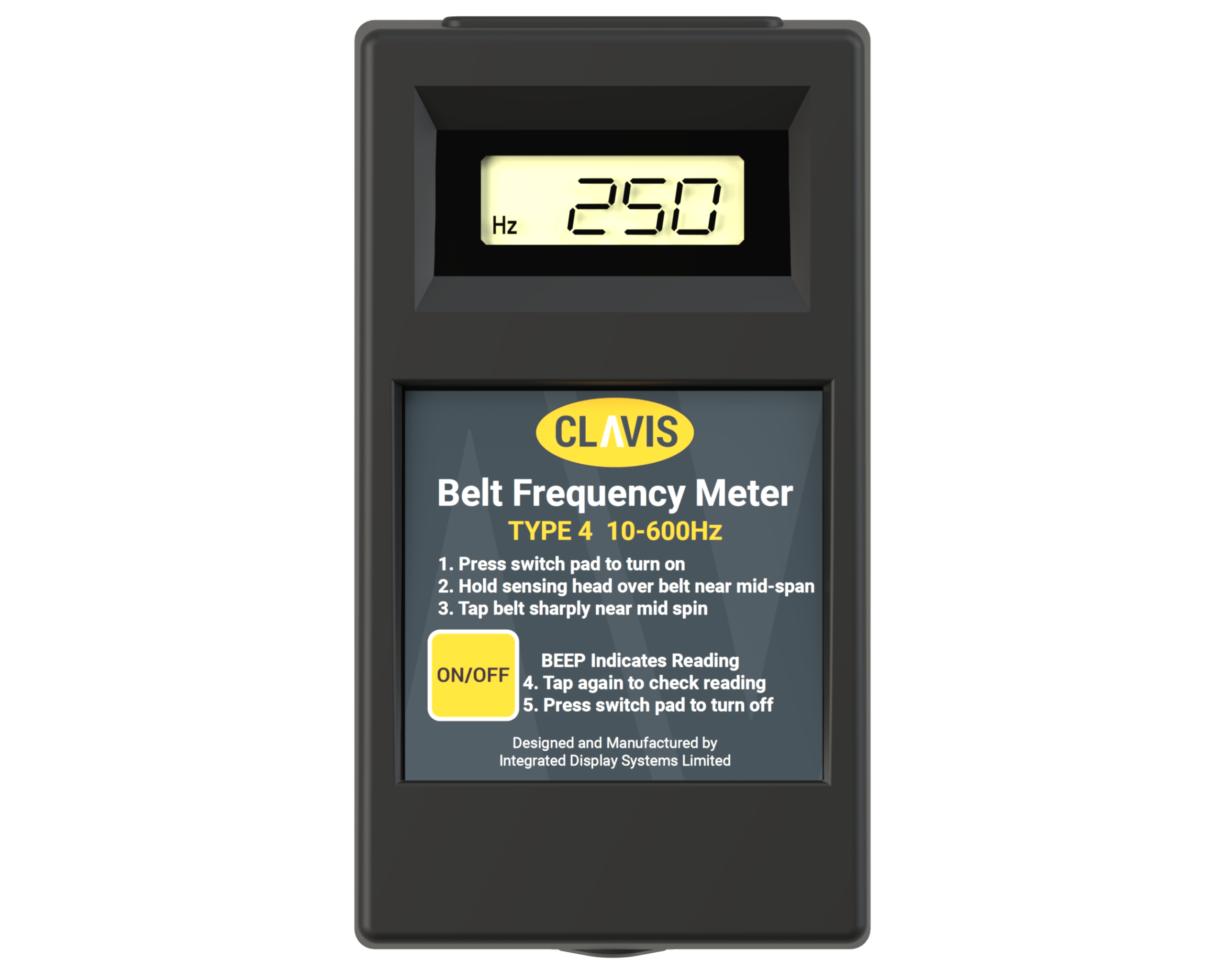
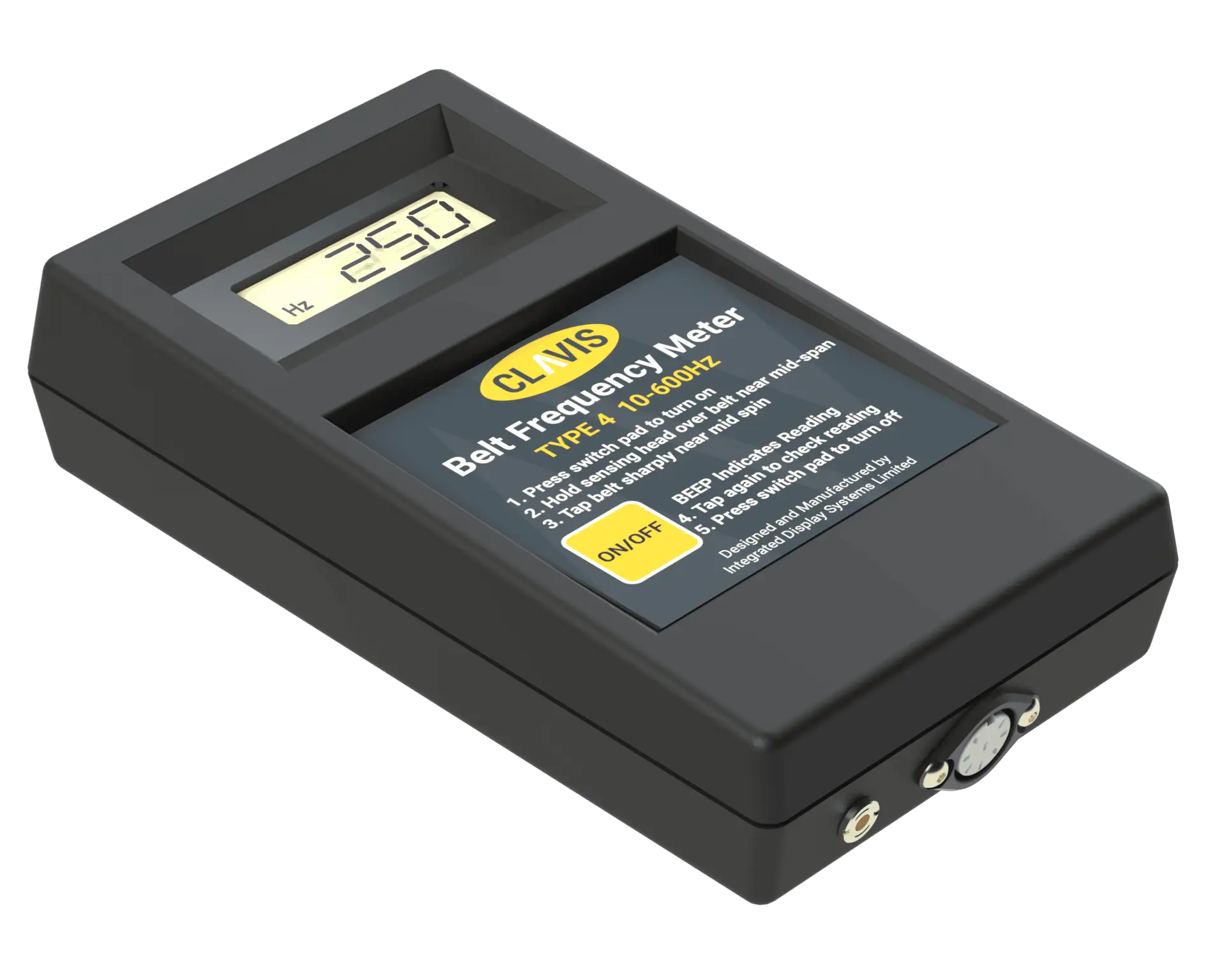
The Type 4 Belt Frequency Meter with Optical sensor head is suitable for measuring frequencies in all types of power transmission belts, ranging from toothed timing belts to poly-vee belts. This meter is useful where there is a requirement to measure tension in a variety of belts, some vibrating at low frequencies.
Key Features:
Belt frequency measured in Hertz with a range of 10-600Hz
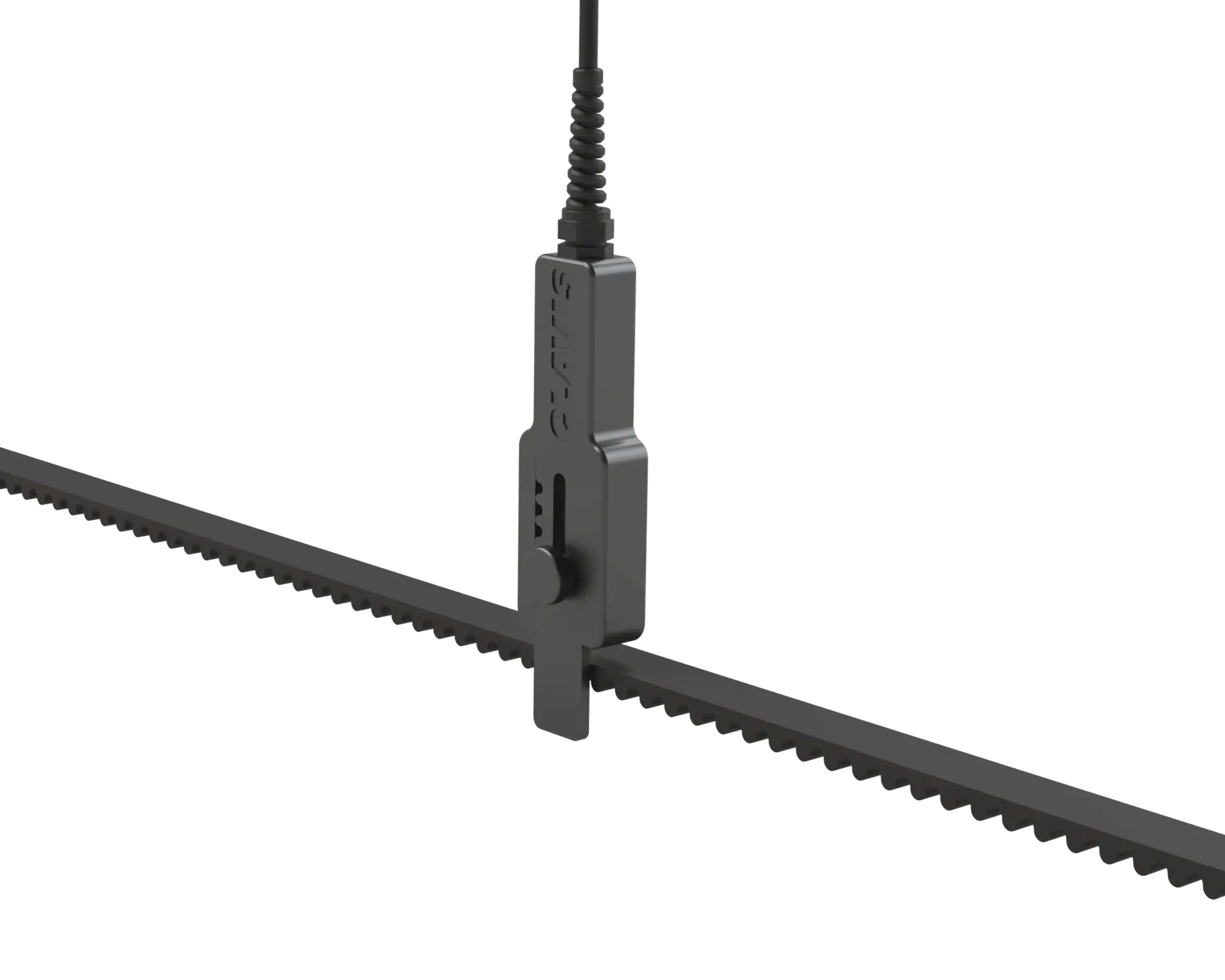
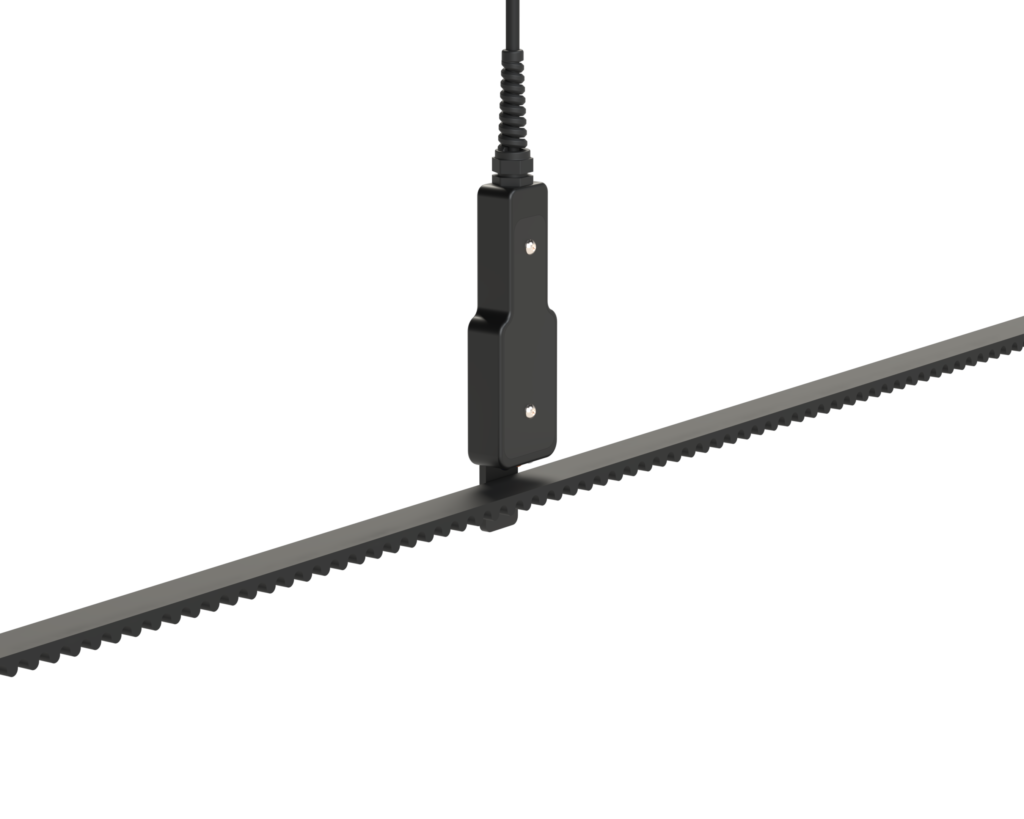
Detachable, flexible optical sensor head with a narrow angle, orange LED visible aiming beam and a 1.4m cable.
Additional sensor heads available to suit all environments
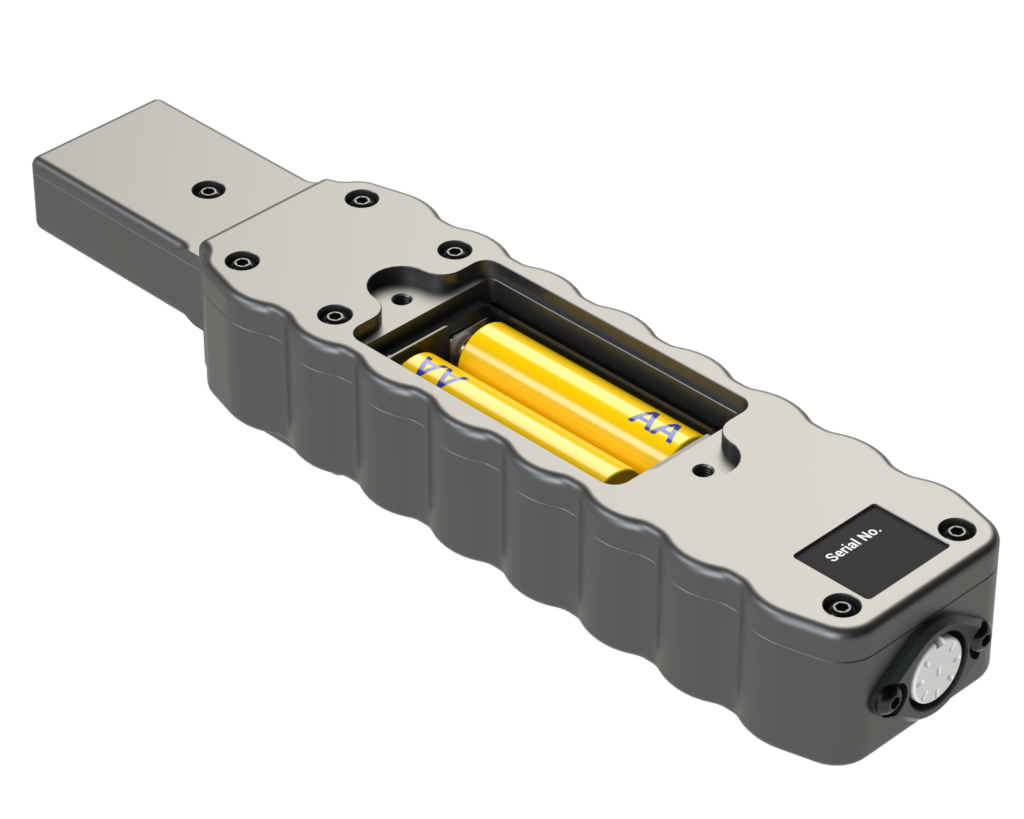
Battery operated (4 x AA), this belt frequency meter comes with rechargeable batteries and charger
The Type 4 Belt Frequency Meter – Optical is supplied with an OPT T01 sensor head as standard. This sensor head has a 970nm IR wavelength, narrow angle orange LED visible aiming beam and a 1.4m cable.
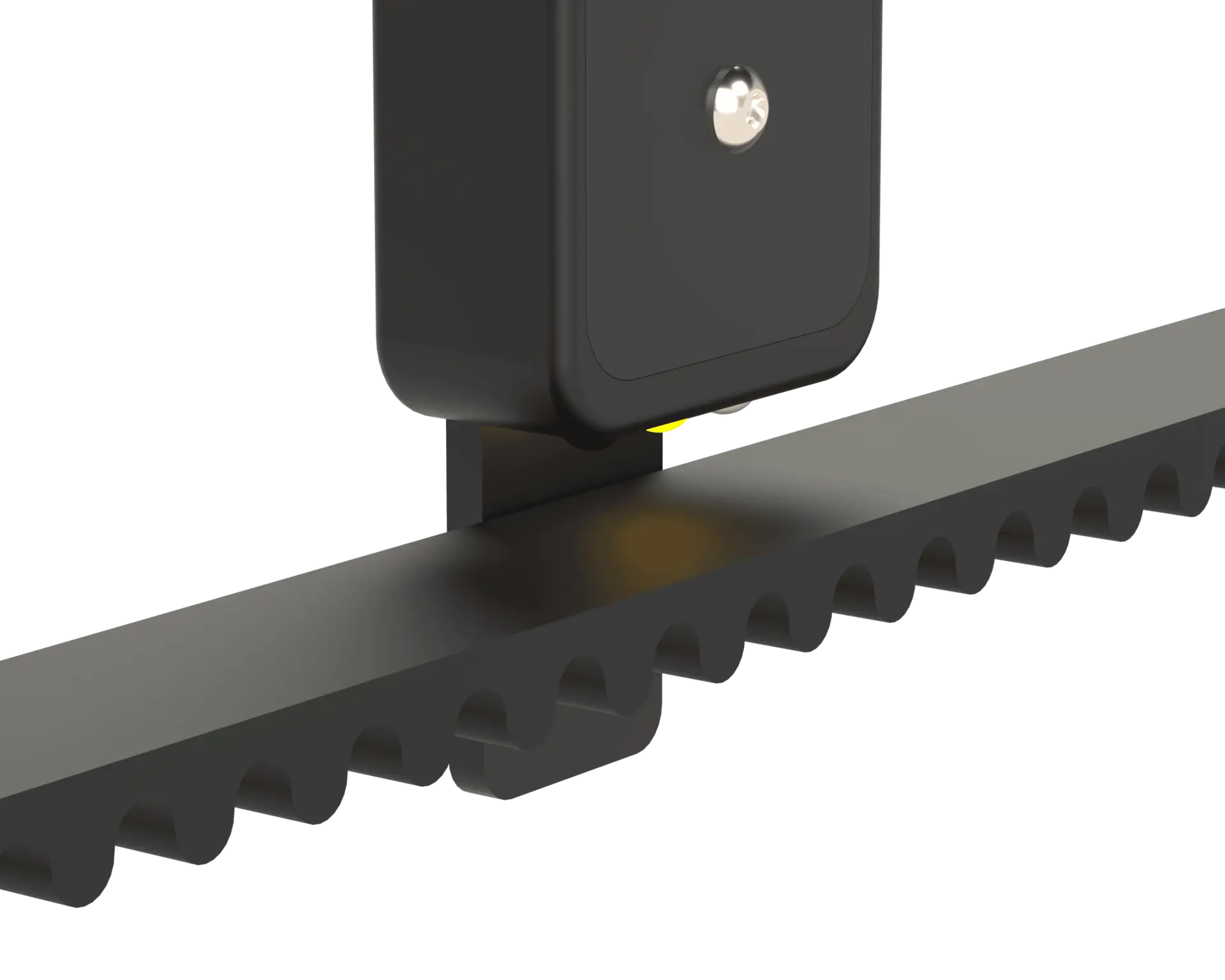
The optical sensor head uses an infrared beam to detect the vibration of the belt. It is particularly suitable for small belts under low levels of tension and wide belts with large spans.
The belt must be tapped to induce the natural frequency of vibration. The optical sensor may be beamed onto the flat side of the belt (either the outer faces or pulley contact face) from distances of 5-15mm although in most cases readings may be taken from distances up to 50mm. Alternatively, the edge of the belt may be used, with the depth finger on the sensor head providing an easy way to hold the sensor steady.
An additional range of sensors are available to suit belts of differing widths, view here
Battery
4 x AA (1.5V) Alkaline Batteries.
The Belt Frequency Meter is compatible with user-supplied rechargeable batteries and a recharging unit. A convenient 3.5mm, positive centre charging socket is located on the bottom end of the meter body adjacent to the sensor cable plug-in port. Charging time is typically 12-14 hours for a full charge. Rechargeable batteries provide 30 hours of continuous operation.
Calibration
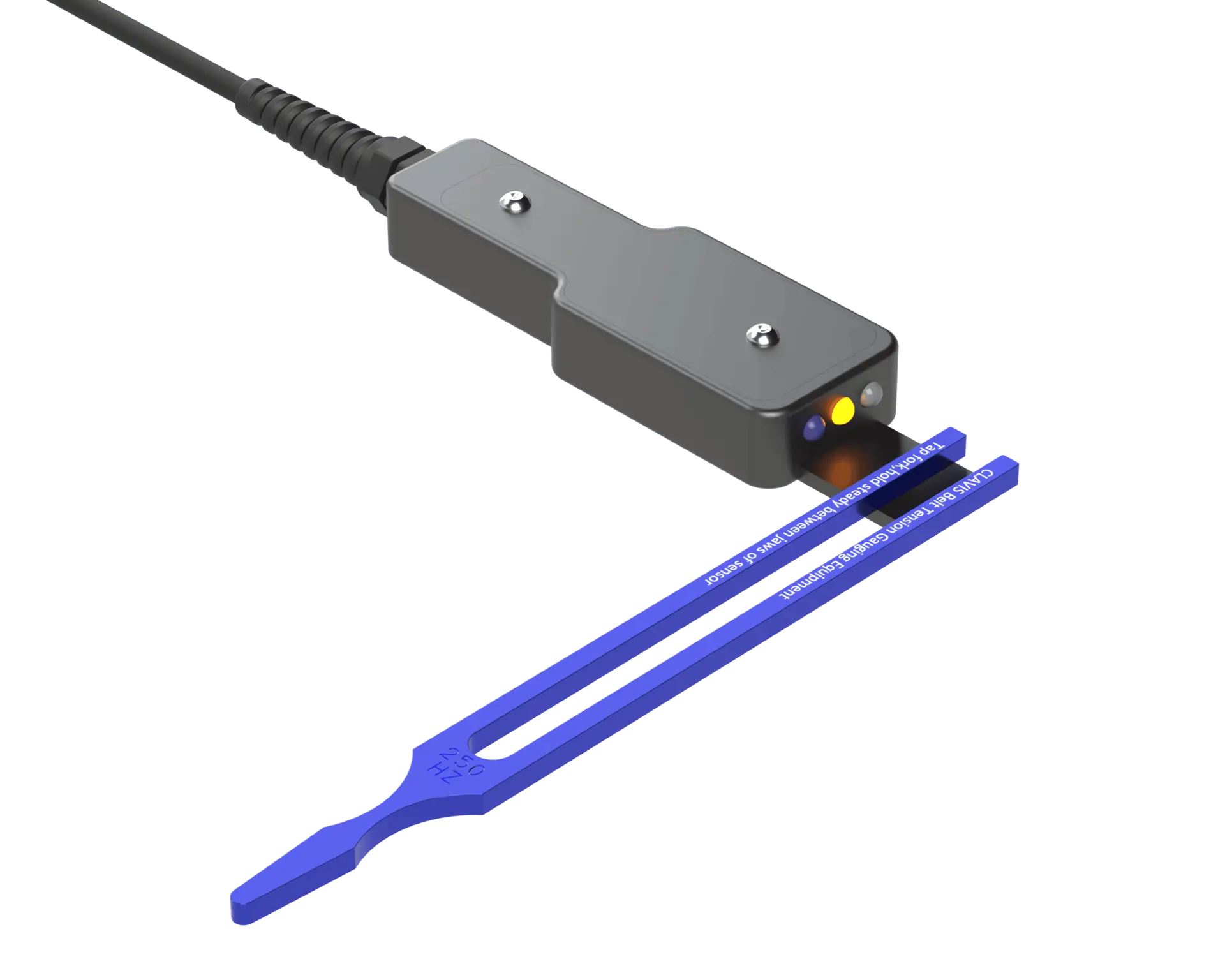
Every Clavis meter is supplied with a precision mechanical resonator (tuning fork) for simple calibration validation by the user. If you have additional calibration requirements, Clavis can supply a Sonic Calibration Meter.
The measurement system of the Belt Frequency Meter is based upon a very stable quartz crystal that should never wander. However, a precision mechanical resonator (tuning fork) is included with the meter so that a calibration check at a spot frequency of 250Hz may be performed at any time.
Are you looking for a new website? Contact Outrank Today