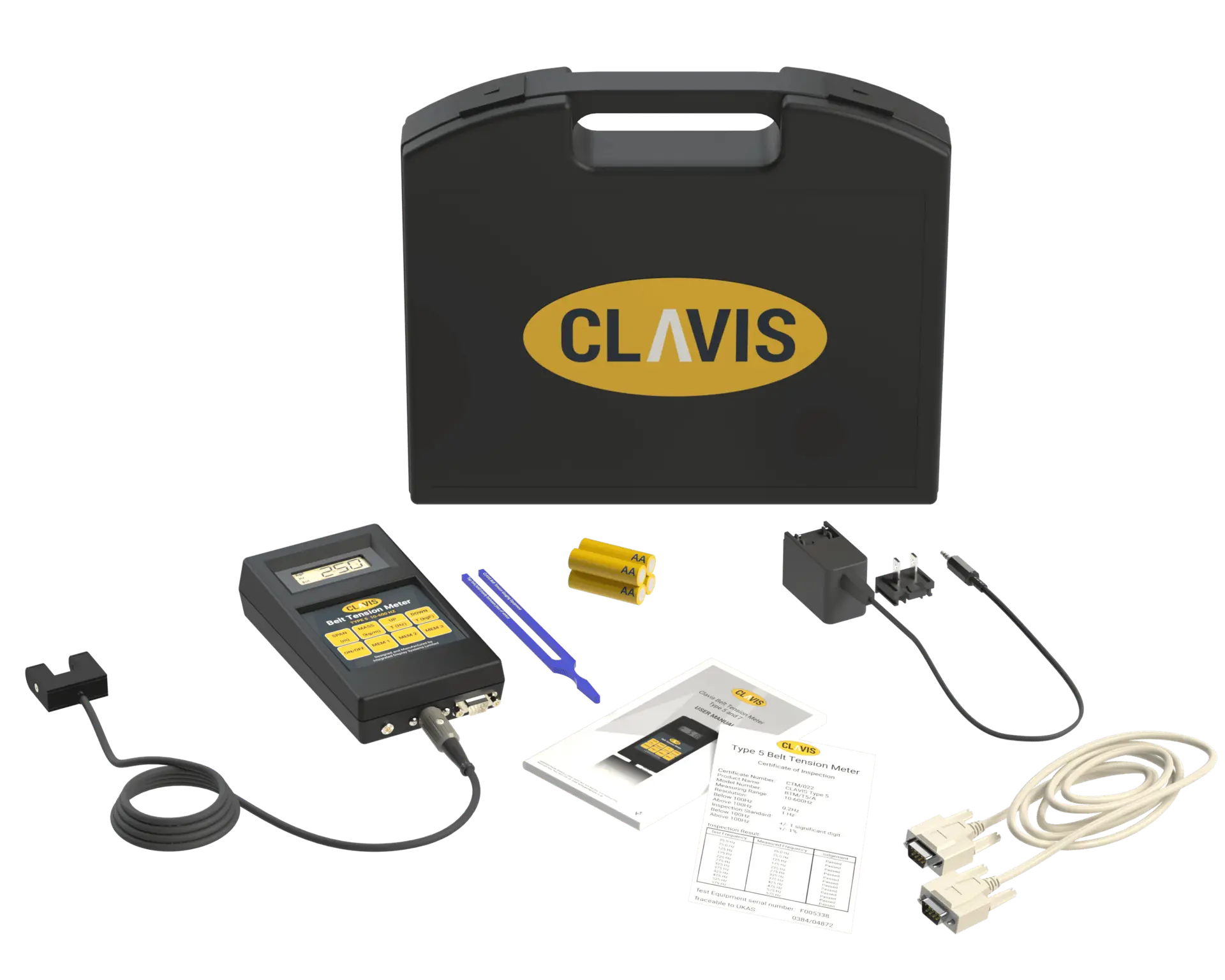
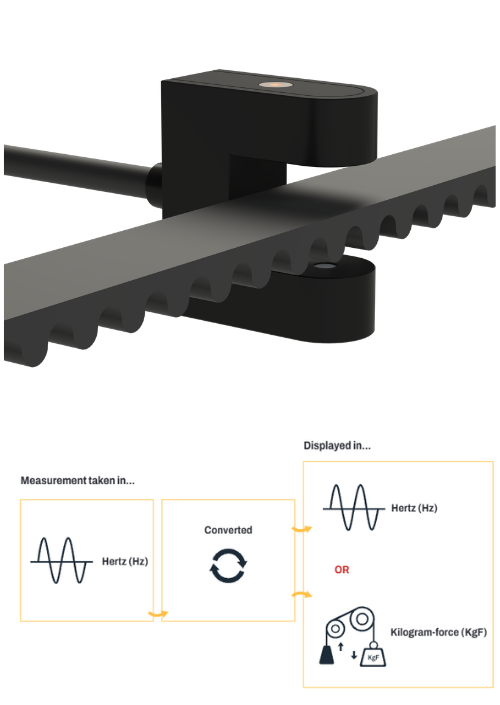
The Type 5 Acoustic Belt Tension Meter is suitable for measuring frequencies in all types of power transmission belts, ranging from toothed timing belts to poly-vee belts. The Type 5 Acoustic Belt Tension Meter has a frequency measurement range of 30Hz to 600Hz and uses an acoustic sensor head. This meter is useful where there is a requirement to measure tension in a variety of belts, some vibrating at low frequencies.
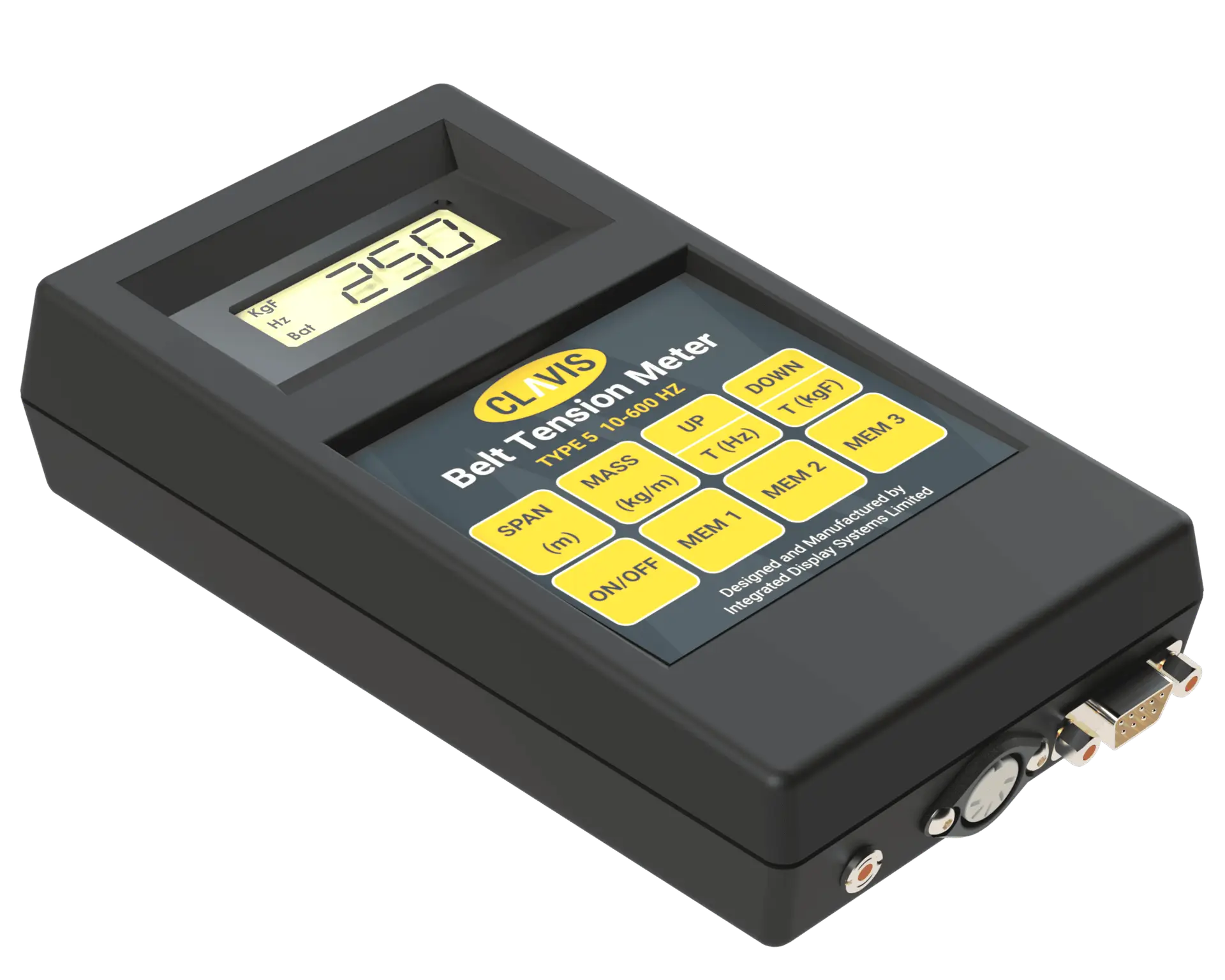
The Type 5 Acoustic Belt Tension Meter has the function to operate in Kilogram-Force (KgF) as well as Hertz (Hz). The Kilogram-Force value is calculated from the belt span and belt mass data, which is entered into the meter. Up to 3 sets of data may be stored in the meter for easy recall. The display may be changed from Hertz to Kilogram-Force by the press of a single key.
Key Features:




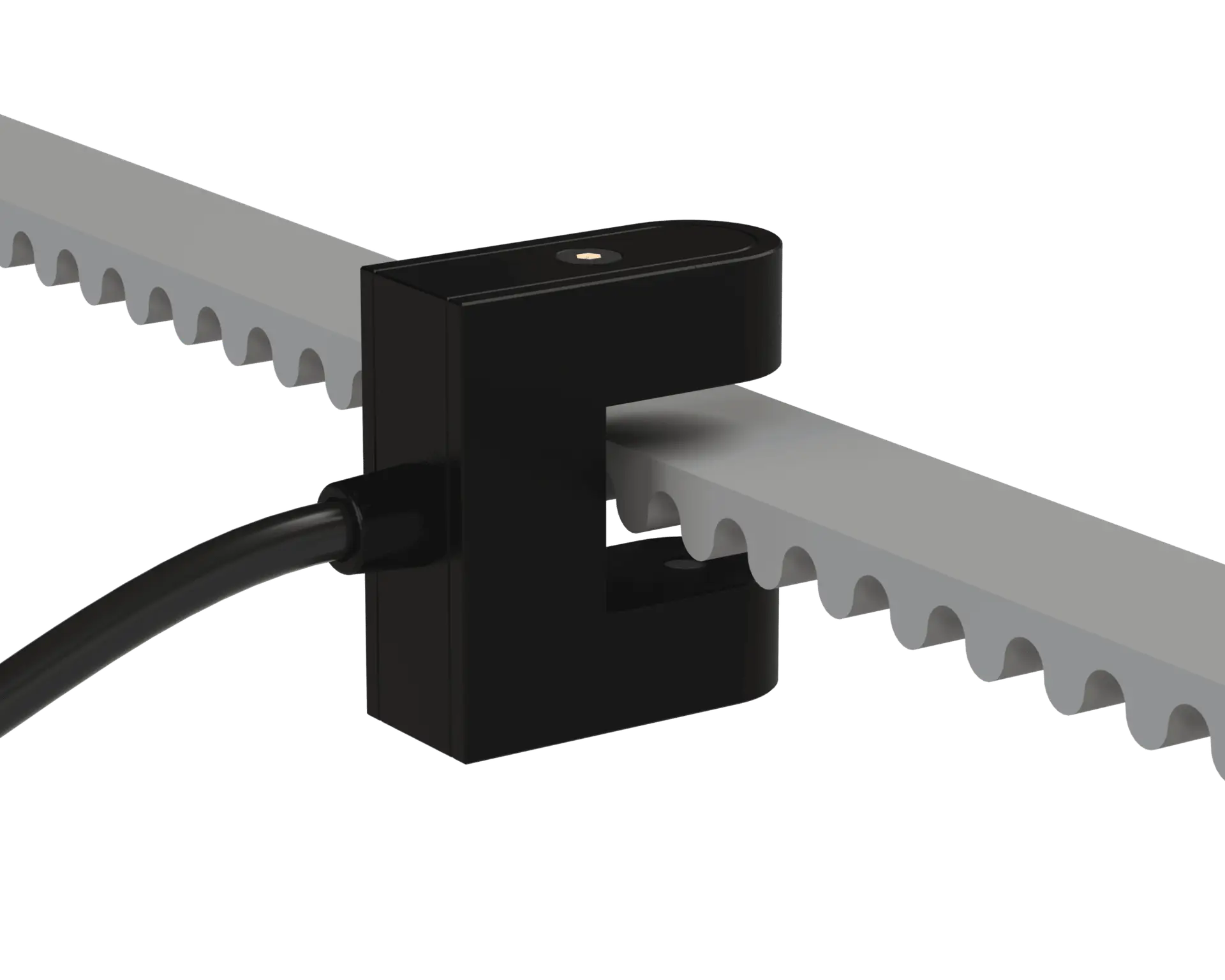
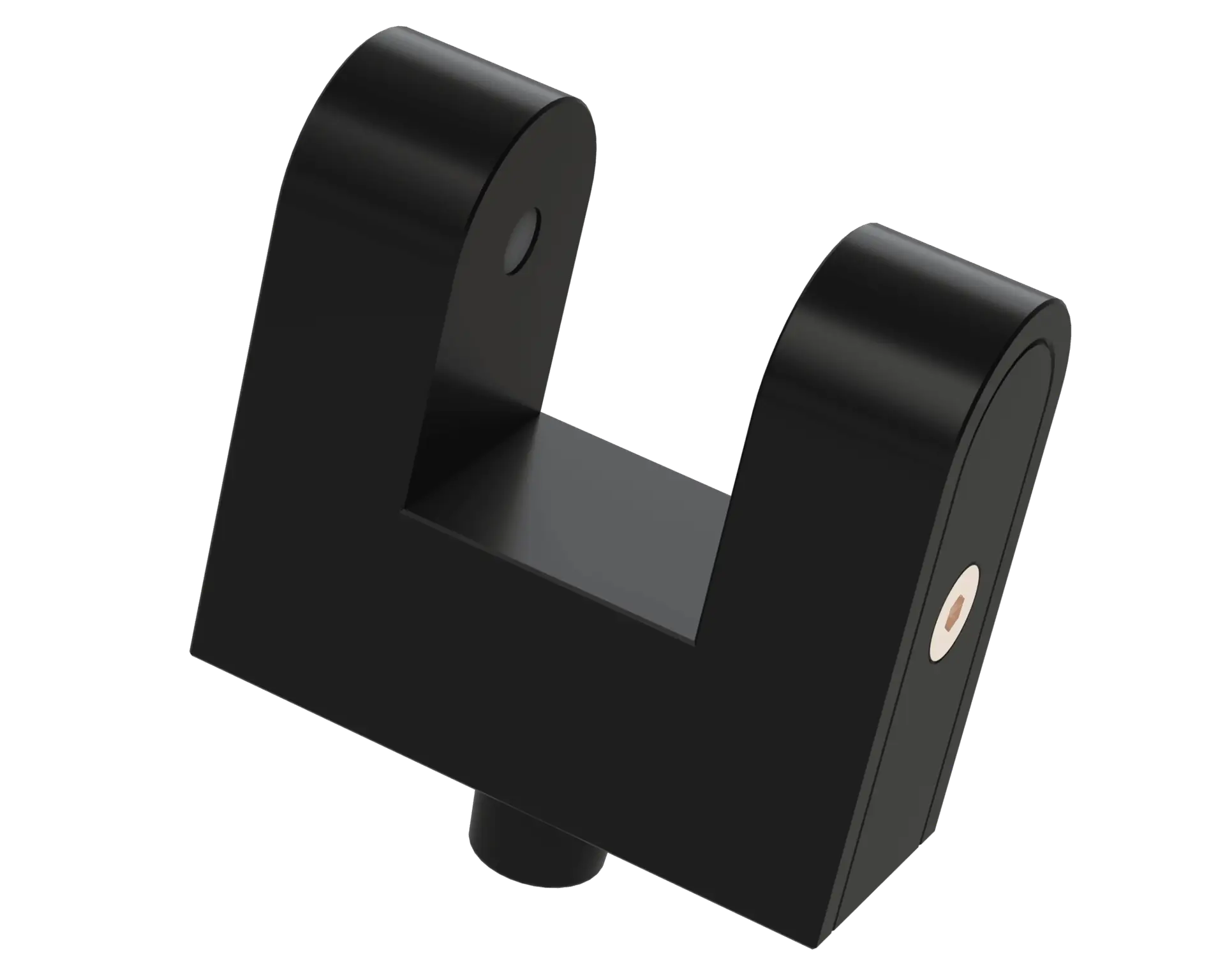
The acoustic sensor head uses a Clavis patented technique for detecting the belt vibration signal whilst minimising ambient noise. The acoustic sensor is particularly suitable for belts which vibrate poorly or where the amplitude of belt vibration is very small. The ‘jaws’ of the sensor should be positioned over the centre of the belt and placed mid length of the belt span. The sensor should not be allowed to touch the belt as this will reduce the belt vibration signal.
An additional range of sensors are available to suit belts of differing widths, view here
The Type 5 Acoustic Belt Tension Meter is suitable for measuring frequencies in all types of belts and outputting measurements in Hertz (Hz) and Kilogram-Force (KgF). The internal programming of the meter is able to report the belt tension in units of force (kilograms force) provided the operator has entered the belt mass and span length using the manually operated keypad. The meter is capable of calculating belt tensions up to 999 KgF. IMPORTANT NOTE: Belt span and belt mass are required entries if tension results in force units (KgF) are desired. Entries must be in SI units (meters and kg/meter).
The vibrational frequency of a bulked string is dependent upon the level of tension, the string’s unit mass, and the vibrating length. The same logic applies to power transmission belts. Investigations show that power transmission belts behave similarly. Data indicates that there is a direct relationship between belt tension and the vibration frequency. However, belt stiffness also plays a part especially in short spans measuring less than 250 mm.
The relationship between belt tension and frequency is: T= 4ml2 2
Where; T = belt tension in newtons (N) m = mass per unit length expressed as kilograms/meter (kg/m) l = span length in meters (m) f = vibration frequency in hertz (Hz)
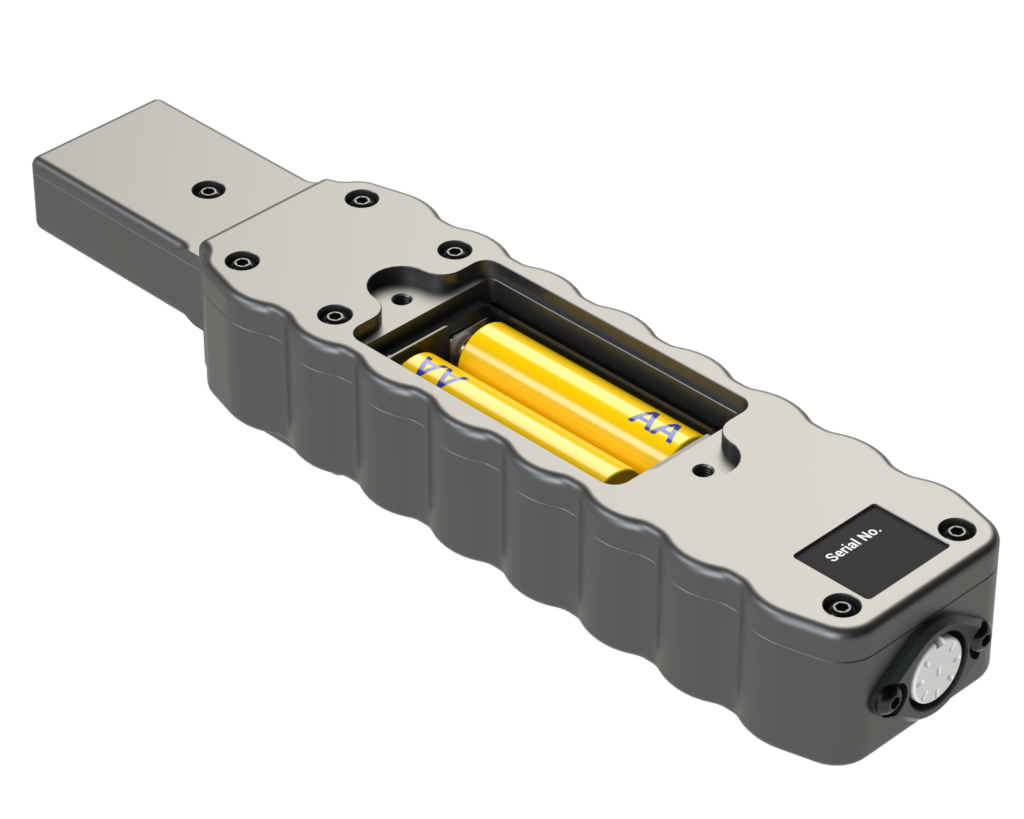
4 x AA (1.5V) Alkaline Batteries.
The Belt Tension Meter is compatible with user-supplied rechargeable batteries and a recharging unit. A convenient 3.5mm, positive centre charging socket is located on the bottom end of the meter body adjacent to the sensor cable plug-in port. Charging time is typically 12-14 hours for a full charge. Rechargeable batteries provide 30 hours of continuous operation.
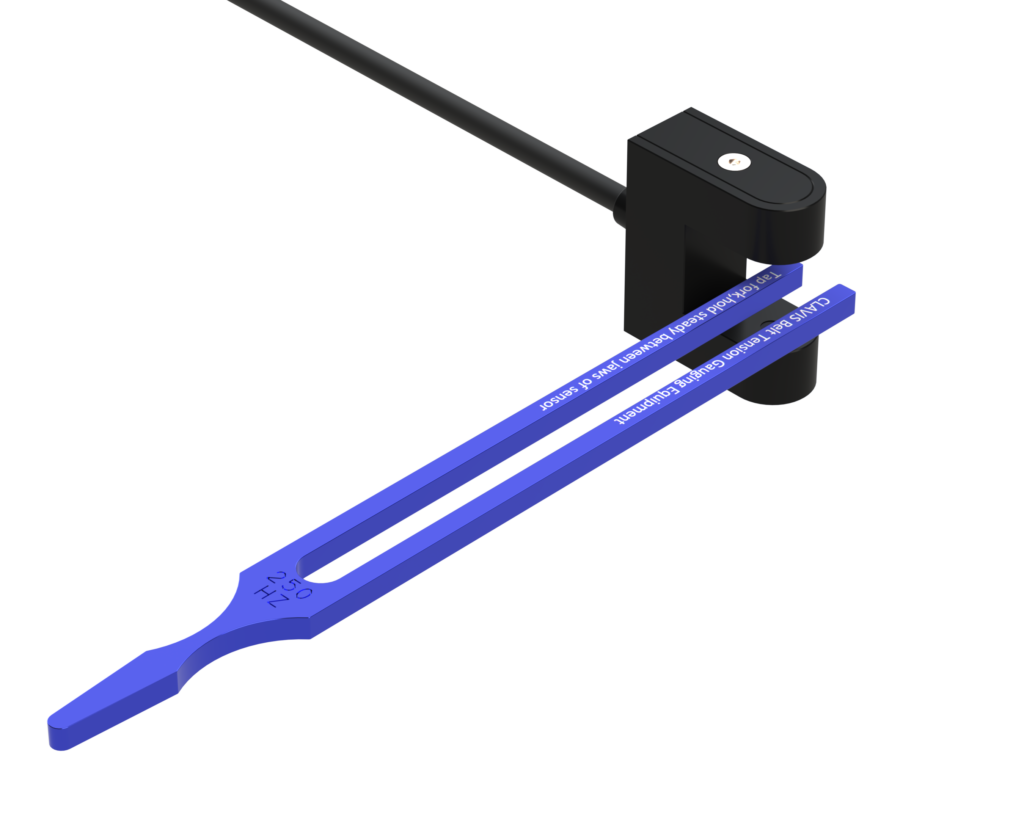
Every Clavis meter is supplied with a precision mechanical resonator (tuning fork) for simple calibration validation by the user. If you have additional calibration requirements, Clavis can supply a Sonic Calibration Meter.
The measurement system of the Belt Frequency Meter is based upon a very stable quartz crystal that should never wander. However, a precision mechanical resonator (tuning fork) is included with the meter so that a calibration check at a spot frequency of 250Hz may be performed at any time.

Are you looking for a new website? Contact Outrank Today

